Is Your Family Ready for the Recruiting Game?
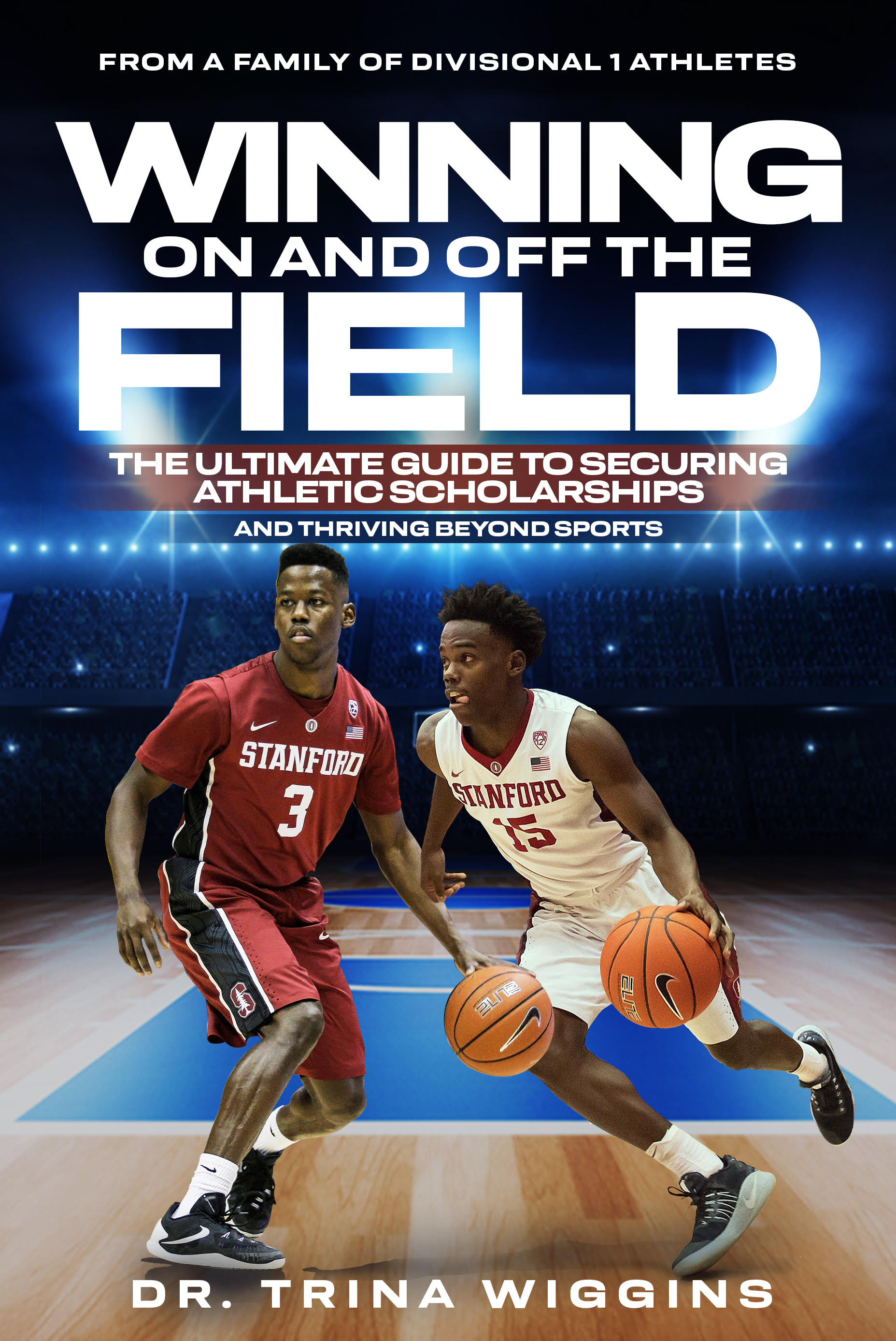
Winning On and Off the Field —
A Playbook for Student-Athletes & Families
Practical strategies to win in recruiting, thrive academically, manage college costs, and prepare for life after sports.
Small Call to Action Headline
Do you have a student-athlete who is passionate about their sport and eager to take it to the next level?
Are you ready to navigate the college recruiting process with confidence, avoid costly mistakes, and give your child the best chance for success?
Inside this book, you’ll gain insider insights and proven strategies from someone who has lived it—both as a Division I Stanford athlete, physician, and parent of collegiate athletes—so you can confidently guide your family through every step of the journey.
Before You Start the Recruiting Process, Ask Yourself...
Do you know what it really takes for your child to secure a scholarship?
Are you confident you understand the recruiting process for their sport?
Do you have a plan to balance academics, athletics, and life after sports?
Are you prepared to navigate financial aid without unnecessary debt?
Designed for Student-Athletes and the People Who Support Them
Families from grade school through high school navigating youth & club sports.
Covering Athletes in ALL governing bodies of college sports, from high-profile to lesser-known sports.
Parents who want step-by-step checklists, planning tools, and real scenarios.
The Skills, Strategies, and Secrets You’ll Gain
Get the insider knowledge and step-by-step strategies to help your student-athlete thrive in sports, academics, and life.
By mastering the art of self-marketing and preparing for life beyond athletics, you’ll gain the tools to maximize opportunities and sidestep the pitfalls that derail so many athletes.
Balancing academics and athletics without burnout
Minimizing your financial burden while avoiding common debt pitfalls
Building mental resilience and peak performance skills
Preparing for life after sports, including career planning
Supporting your athlete’s health, nutrition, and mindset for long-term success
Get a Free Excerpt from
Winning On and Off the Field
A practical guide for parents who want to help their student-athlete succeed in sports, school, and beyond.
If you're raising an athlete, you already know—it’s not just about talent.
It’s about discipline, mindset, structure, and making the right decisions on and off the field.
This free excerpt will give you a behind-the-scenes look at how to:
-Support your athlete without overwhelming them
-Build habits that translate to success in sports and life
-Navigate the path toward college opportunities and scholarships
Whether your child is just starting out or already competing, this will give you clarity and direction.

Send My Free Excerpt
Receive an excerpt of Winning on and off the Field.
Please provide your information below.
MEET THE author
Dr. Trina Wiggins
Dr. Trina Wiggins is a board-certified pediatrician and proud alumna of Stanford University, where she made history as a trailblazing gymnast.
As the first African-American woman to compete on Stanford’s gymnastics team, she brought both talent and tenacity to the sport—qualities that have continued to define her career.
Her athletic journey extended to family life, where she and her husband—a former Vanderbilt football player—raised twin sons who each earned Division I basketball scholarships at Stanford.
This unique combination of personal achievement and family experience gives Dr. Wiggins a rare 360-degree perspective on the demands, challenges, and opportunities student-athletes face.

Dr. Trina Wiggins blends real-world experience as an athlete, parent, and physician with proven strategies for success — both on and off the field.
TESTIMONIALS
What readers are saying.....
"Dr. Wiggins was incredibly helpful in giving my son advice on how to pursue a collegiate athletic scholarship.
Her family’s story motivated him to chase his dream of becoming a collegiate athlete.
Dr. Wiggins emphasized the importance of excelling in school and preparing for college admission tests. Thanks to her guidance, Jordan was able to earn a collegiate athletic scholarship to Ottawa University.
Thank you for all of your help and support."
Nicola Nelson

"Dr. Wiggins emphasized the crucial role of open communication between the coach, parents, and student-athletes in setting realistic expectations and ensuring everyone is aligned.
It can be frustrating when it seems like coaches are just adding another recruit to their list without showing genuine interest in the student-athlete as an individual.
She also highlighted that performing well in the classroom supports academic success and opens up more opportunities for athletic scholarships, giving student-athletes a wider range of options."
Fredia Rice
"My husband and I were blessed to have a conversation with Dr. Trina Wiggins regarding our daughter’s recruiting process.
We were overwhelmed by all the different aspects our daughter needed to consider when making her decision. Dr. Wiggins has a deep understanding of the athletic and academic landscape.
We were given all the information we needed to make the right decision to suit our daughter’s situation. We know our daughter landed at the right college, in the right program, surrounded by the right people, thanks to our conversation with Dr. Wiggins.
We will forever be grateful for her guidance and support."
Dr. Janelle Agosto and Dr. Raul Romero
5 Mistakes Parents Make in the College
Recruiting Process
Starting Too Late
Waiting until junior or senior year of high school to get serious about recruiting often means missed opportunities.College coaches often begin tracking athletes as early as 8th or 9th grade in many sports.
Focusing Only on Athletic Performance
Coaches recruit student-athletes — not just athletes.A strong GPA, solid test scores, and character references can be the deciding factor between two equally talented players.
Relying Solely on the High School Coach
While many coaches are supportive, they may not have the network, time, or strategy to effectively market your child to the right programs.Overlooking Fit for Academics & Campus Life
Picking a school just for the team or scholarship offer can backfire if the academic program or environment isn’t a good match.Not Understanding the Scholarship Landscape
About 2% of high school athletes receive athletic scholarships, but the majority of these are partial scholarships that cover only a fraction of college costs. Less than 1% receive a full-ride scholarship that covers all major expenses, such as tuition, room, board, and fees.
Eye-Opening Stats Every Parent Should Know
Only about 7% of high school athletes go on to compete at the NCAA level, and of those, roughly 2% receive athletic scholarships—most of which cover only part of the total college costs.
The current average athletic partial scholarship for Division 1 student-athletes is approximately $14,270 a year for men and $15,162 a year for women. However, these amounts can vary tremendously depending on the sport.
Academic and need-based aid often outweigh athletic scholarships — yet many families never apply for all available programs.
READY TO START READING?
Discover insights, tools, and strategies to help your student-athlete succeed — on and off the field.
From navigating the recruitment process to balancing academics, athletics, and life after sports, this book delivers practical guidance from someone who’s been there.
You’ll gain real-world strategies, actionable tips, and a new perspective on turning the recruitment process into a powerful self-marketing opportunity.
Take the next step toward your athlete’s future.
START READING TODAY — AVAILABLE ON AMAZON